Currently Empty: ₹0.00



Blog
Why Artificial Intelligence for School Students Matters Now
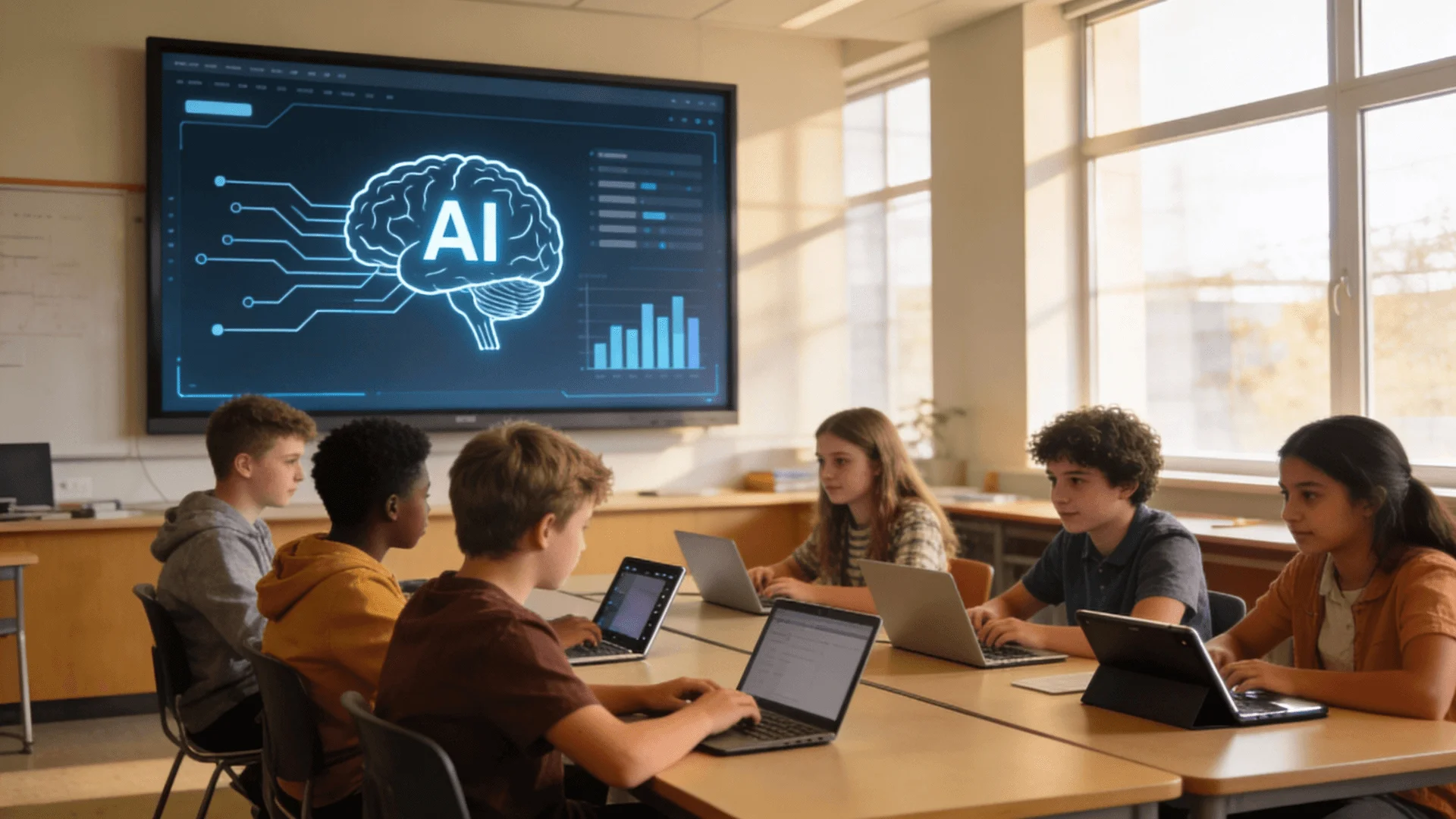
The world your students will graduate into is not just digital—it is intelligent, automated, and data‑driven, and that shift is happening faster than most schools can adapt. Parents already see AI in everyday tools like YouTube recommendations, language apps, and homework helpers, while many students use AI daily without actually understanding how it works or what risks it brings.
Teaching artificial intelligence for school students is no longer a “nice‑to‑have” futuristic elective—it is becoming as fundamental as reading, writing, and arithmetic. In India and worldwide, policy makers, boards, and universities now expect students to have at least basic AI literacy by the time they finish school.
What is the significance of Artificial Intelligence for School Students
For school students, artificial intelligence simply means computer systems that can:
- Recognize patterns (faces, voices, handwriting, exam answers)
- Learn from data and improve over time (adaptive quizzes, recommendations)
- Make predictions (which student might struggle, which topic to revise next)
- Interact in human‑like ways (chatbots, voice assistants, image generators)
When teachers introduce artificial intelligence for school students in age‑appropriate ways, they are not turning children into data scientists overnight. They are helping them:
- Understand how AI tools they already use actually work behind the scenes
- Question AI decisions, spot bias, and use technology responsibly
Global Push to Integrate AI in School Education
Across the world, organisations like UNESCO are urging governments to treat AI literacy as a core competency for both students and teachers. UNESCO has released AI competency frameworks that spell out what young learners should know about AI’s benefits, limits, and ethical issues at different stages of schooling.
At the same time, these bodies warn against blindly deploying AI in classrooms without safeguards. They stress:
- Age limits and protections for younger learners using generative AI
- Strong data privacy policies and clear rules on what AI tools may collect
How India Is Bringing AI into Schools
India has moved aggressively to make artificial intelligence for school students part of mainstream schooling, not just a niche club activity. Key developments include:
- AI as a subject: From Classes 9 and 10 onwards, Artificial Intelligence is being introduced as a compulsory subject or skill module in many CBSE‑affiliated schools.
- Curriculum from Class 3: AI and computational thinking concepts are being woven into the curriculum starting as early as Class 3 in CBSE and several state boards.
The Government of India’s SOAR (Skilling for AI Readiness) initiative specifically targets Classes 6–12, embedding AI awareness and foundational competencies while upskilling teachers alongside students. NCERT has also set up a dedicated team to develop AI textbooks for Classes 11 and 12, aligning with the National Education Policy 2020 and Viksit Bharat 2047 vision.
11 Key Benefits of AI for School Students
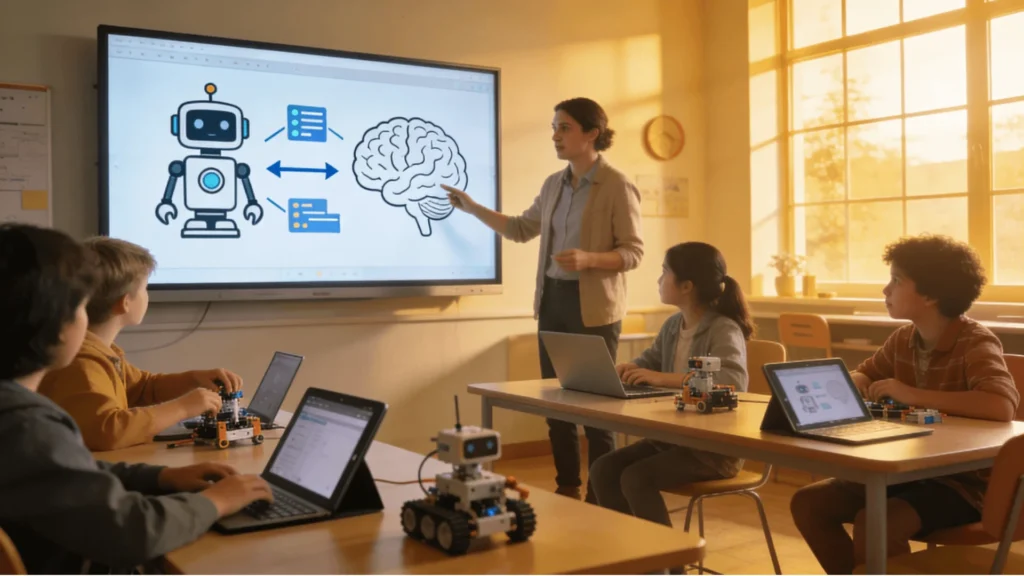
When implemented thoughtfully, artificial intelligence for school students transforms both how children learn and how teachers teach. Below are the most important benefits schools can tap into right now.
1. Personalized Learning for Every Student
AI‑powered platforms track how each learner performs and then adapt the difficulty level, pace, and type of content accordingly. A student who struggles with fractions may see more visual problems and step‑by‑step hints, while an advanced learner might jump straight to challenging word problems.
According to research cited by education technology providers, personalised AI‑based learning systems can improve student achievement by up to 20%, especially when combined with good teaching practices. For over‑burdened classrooms, this means shy, slow, and fast learners are all more likely to get the right level of challenge.
2. Smarter, Faster Feedback
Instead of waiting days for notebooks to be checked, students can receive instant feedback on objective questions, short answers, and even basic programming tasks through AI assessment tools. For teachers, this means less time spent on repetitive checking and more time understanding where students are stuck.
AI can highlight which questions most of the class got wrong, pointing teachers toward misconceptions that need re‑teaching. Over time, the system builds a detailed picture of each learner’s strengths and gaps, which can also help with parent‑teacher meetings.
3. Support for Diverse Learners and Inclusive Classrooms
Artificial intelligence for school students can significantly improve accessibility. Examples include:
- Automated captioning and transcripts for videos to support hearing‑impaired students
- Text‑to‑speech for learners with reading difficulties or visual impairment
- Translation tools to bridge language gaps in multilingual classrooms
By personalising resources and formats, AI helps more children participate fully in classroom activities, not just those who already fit the “average” learner profile.
4. Early Identification of Students at Risk
AI systems can analyse attendance, assignment submissions, quiz scores, and engagement data to flag students who may be at risk of falling behind long before final exams. When teachers receive early alerts, they can intervene with extra support, mentoring, or counselling.
Some school management systems now use predictive analytics to generate risk scores, helping leaders ensure that no student “slips through the cracks” simply because a problem was noticed too late.
5. Reduced Teacher Workload on Routine Tasks
For overworked teachers, one of the biggest promises of artificial intelligence for school students lies behind the scenes. AI tools can:
- Auto‑grade objective tests and quizzes
- Draft lesson plans based on curriculum standards
- Generate practice worksheets and question banks in minutes
This does not replace the teacher’s judgment; instead it frees up time for what only humans can do well—mentoring, motivating, and building relationships.
6. More Engaging, Interactive Learning
Gamified AI platforms reward students with badges, levels, and points as they master new concepts, turning dry topics into interactive challenges. Virtual tutors and chatbots can answer common doubts after school hours, giving students the confidence to explore topics more deeply.
Because these tools respond dynamically to student input, learners feel they are “in conversation” with the content, not just passively reading or listening. Engagement often rises, especially in subjects that traditionally intimidate students like mathematics and coding.
7. Development of Future‑Ready Skills
Beyond content knowledge, artificial intelligence for school students builds critical future skills. Students learn to:
- Think in terms of data, patterns, and algorithms
- Break big problems into smaller, solvable steps
- Collaborate with AI tools rather than fear or blindly trust them
UNESCO emphasises that AI literacy should help young people become responsible creators and informed users of AI, not just passive consumers of ready‑made apps. These skills are relevant across careers—from medicine and law to media, business, and the arts.
8. Exposure to New Career Pathways
By the time current middle‑schoolers graduate, AI‑related roles are expected to be mainstream across sectors such as finance, healthcare, agriculture, logistics, and creative industries. When schools introduce AI early, students discover interests in fields like data science, robotics, ethical AI, and human‑computer interaction.
Initiatives like India’s SOAR and CBSE’s AI curriculum are designed not just to teach theory but to make students aware of concrete academic and career pathways connected to AI.
9. Support for Lifelong, Self‑Directed Learning
AI‑powered learning platforms don’t switch off when the school bell rings. Students can log in from home, explore new topics, revise old ones, and follow personalised learning paths at their own pace.
As learners experience this autonomy, they begin to see education as an ongoing process rather than something that happens only in classrooms. This mindset of lifelong learning is essential in a world where technologies change rapidly.
10. Data‑Driven School Management
School leaders can use AI analytics to understand:
- Which teaching strategies are working best in specific grades
- How attendance links to performance over time
- Where resources (labs, devices, time) are under‑ or over‑used
By making better, data‑informed decisions, schools can improve outcomes without necessarily increasing budgets.
11. Preparation for Ethical, Responsible Citizenship
Finally, artificial intelligence for school students is about ethics as much as efficiency. When children learn how AI can amplify bias, invade privacy, or spread misinformation, they also learn how to question systems and demand accountability.
UNESCO’s guidance on generative AI in education highlights the need to teach students critical digital literacy so they can spot deepfakes, understand data consent, and make informed choices about their own digital footprints.
Practical Ways Schools Can Introduce AI
Schools do not need expensive robots or fully‑equipped labs to start with artificial intelligence for school students. A gradual, layered approach often works best.
Start with Everyday AI Examples
Begin by helping students notice where AI shows up in their daily lives:
- Video recommendations on streaming platforms
- Smart assistants on phones and speakers
- Auto‑complete and spell‑check in messaging apps
- Face recognition used for device unlocking
Simple classroom discussions about “How did the system guess that?” make AI less mysterious and more understandable.
Use Age‑Appropriate Tools and Projects
For younger students, focus on pattern recognition, logic puzzles, and stories about helpful robots rather than complex algorithms. Older students can:
- Build simple chatbots using visual, block‑based tools
- Explore AI that recognises images or sounds in guided environments
- Analyse small datasets (for example, their own daily habits) with basic machine learning demos
Many of these tools are browser‑based and free or low‑cost, making them practical even for resource‑constrained schools.
Integrate AI Across Subjects
Artificial intelligence for school students becomes more meaningful when it is not confined to a single “AI period.” For example:
- In science, students could use AI simulations to model climate patterns or ecosystems
- In social science, they can debate AI’s impact on jobs, democracy, and privacy
- In languages, students can analyse how translation tools handle idioms and culture
This cross‑curricular approach reflects how AI operates in the real world—embedded inside many different domains.
Safety, Ethics, and Regulations in School AI Use
While the benefits are significant, every discussion about artificial intelligence for school students must address risks and regulations. UNESCO and other organisations repeatedly stress that AI in education should be “human‑centric,” enhancing, not replacing, human relationships and professional judgment. Key considerations for schools include:
- Age limits and consent: Some guidance suggests age 13 as a minimum for using powerful generative AI tools in classrooms.
- Data privacy: Schools must ensure AI platforms store and process student data securely and transparently.
- Bias and fairness: Teachers need to discuss how AI systems can inherit discrimination from biased data.
By turning these into classroom topics rather than hidden fine print, schools teach critical thinking and digital citizenship alongside technical know‑how.
How Teachers and Parents Can Prepare
Teachers are central to any successful integration of artificial intelligence for school students. UNESCO’s AI competency frameworks for teachers encourage training in both technical understanding and ethical, pedagogical application of AI. Parents can support by:
- Asking children how AI tools are used in schoolwork
- Setting boundaries for unsupervised AI use at home
- Encouraging curiosity—“Why did the app recommend this?”—instead of passive acceptance
When adults model thoughtful, reflective use of AI, students quickly follow.